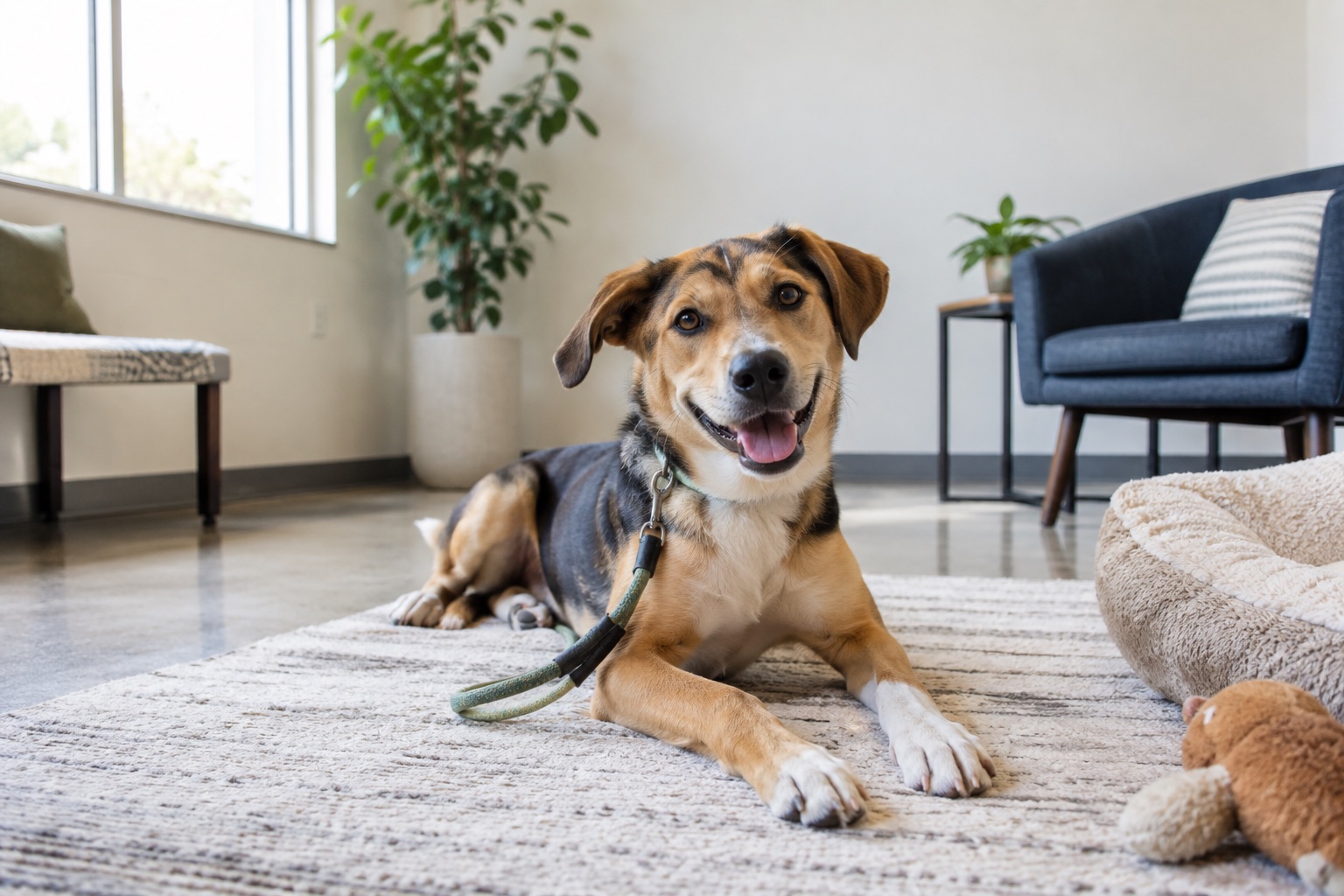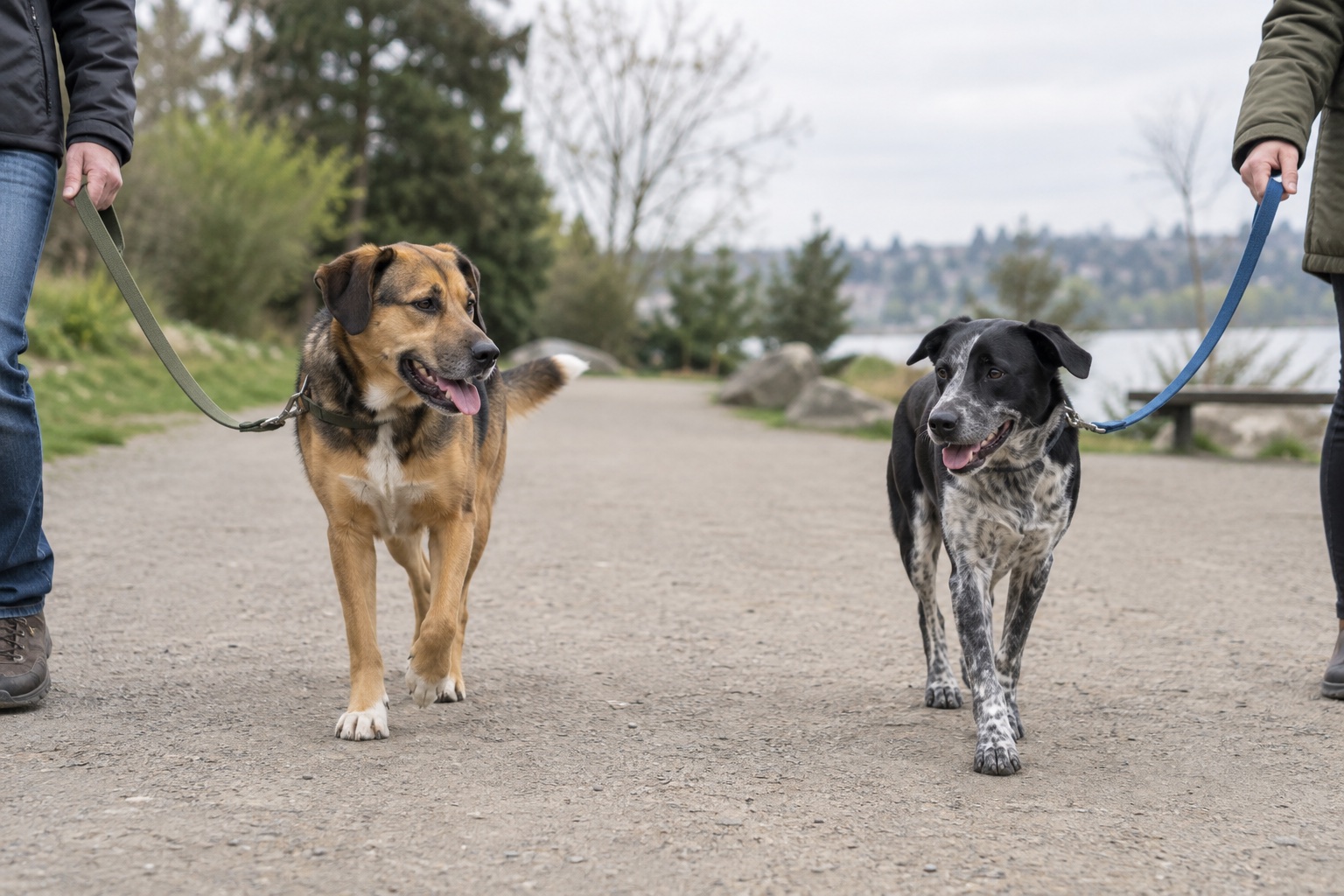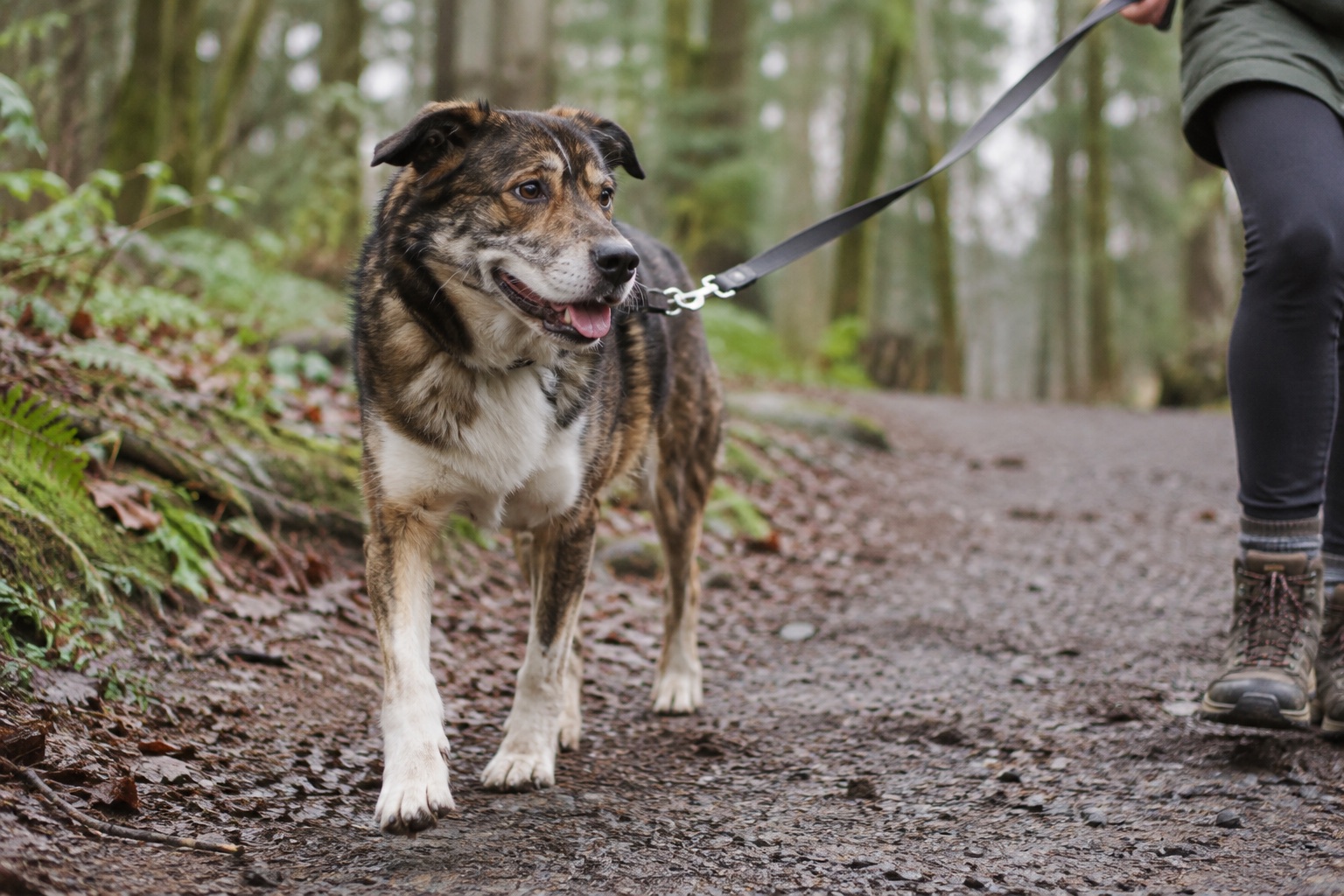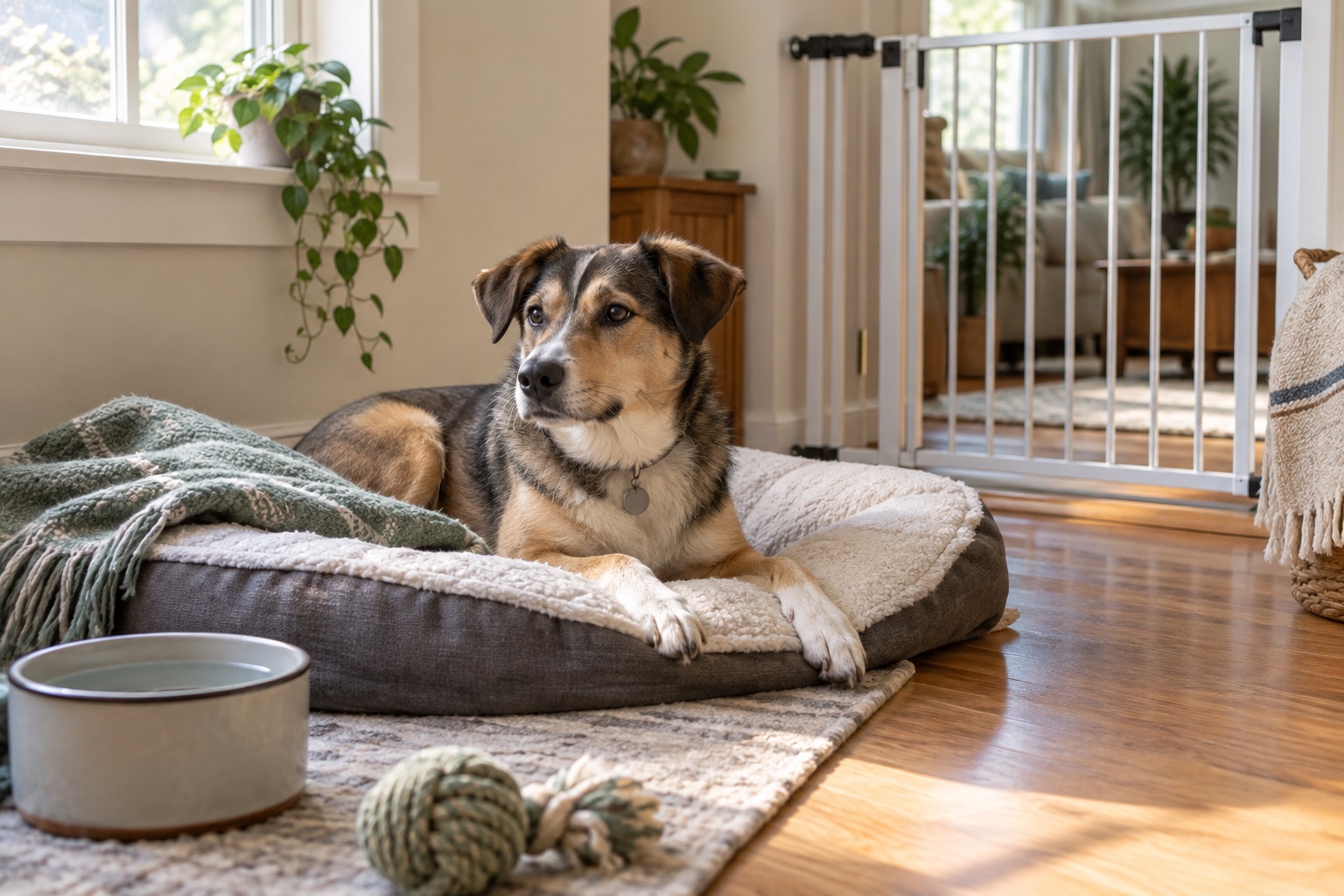
During the first 30 days with a rescue dog, prioritize physical safety, a predictable routine, quiet decompression, veterinary follow-up, and gradual access to people, pets, and spaces. Let the individual dog set the pace rather than expecting adjustment on a fixed deadline.
Before pickup
Confirm the dog’s current food, medications, bathroom schedule, equipment, veterinary records, known triggers, and transport plan. Prepare:
- A quiet bed or retreat where nobody disturbs the dog.
- Secure doors, windows, gates, fencing, leash, harness or collar, and identification.
- Food and water bowls, familiar food, cleanup supplies, and appropriate enrichment.
- Separation areas for resident animals.
- Household rules everyone will follow.
Newly adopted dogs can be flight risks. Use the equipment recommended by the rescue and double-check exits before the dog arrives.
The first night
Keep the evening simple. Show the dog the bathroom area, water, and resting space. Avoid a welcome party, busy store, dog park, or a stream of visitors. Supervise without following the dog constantly.
The dog may pace, sleep deeply, vocalize, hide, refuse food, have an accident, or seek constant contact. Report urgent health concerns to a veterinarian or the rescue, but do not interpret one stressful night as the dog’s permanent personality.
The first three days
Use a small, manageable part of the home. Establish consistent meal, bathroom, rest, and walk times. Keep walks quiet and secure. Offer choices where safe: rest here or there, engage with a toy or walk away, approach a person or observe from a distance.
The popular “3-3-3” guideline describes adjustment in three-day, three-week, and three-month stages. Treat it as a reminder that settling takes time, not as a deadline. The ASPCA’s adoption guidance(opens in a new tab) explicitly notes that some pets adjust quickly and others need longer.
The first week
Schedule veterinary care according to the adoption organization’s instructions. Bring records and a list of medications, diet, appetite, bathroom patterns, and concerns. Avoid abrupt food changes unless a veterinarian directs them.
Begin brief, reward-based household lessons. Reinforce behaviors you want and prevent rehearsal of unsafe ones with gates, leashes, storage, and supervision. Punishment can increase fear and does not teach the dog what to do instead.
Weeks two through four
Expand the dog’s world gradually if body language and recovery suggest comfort. Add one change at a time: a new walking route, a short visitor interaction, access to another room, or a carefully planned pet introduction.
Watch for patterns in sleep, appetite, elimination, movement, play, vocalization, and response to handling. Keep notes for your veterinarian, trainer, behavior consultant, or rescue contact.
Introduce household members slowly
Children should remain calm, avoid hugging or crowding, and leave the dog alone while eating or resting. Adults must supervise directly. Resident pets need separate resources and a planned introduction; read our guide to introducing two dogs.
When to seek help
Contact a veterinarian promptly for health changes such as repeated vomiting, difficulty breathing, collapse, significant injury, inability to urinate, or other urgent concerns. Ask the rescue and a qualified behavior professional about persistent panic, aggression, severe guarding, self-injury, or inability to settle safely.
First-30-days checklist
- Secure identification and transfer microchip details.
- Maintain the initial food and medication plan.
- Establish quiet sleep, meal, bathroom, and walk routines.
- Complete recommended veterinary follow-up.
- Prevent escapes and unsupervised pet or child interactions.
- Introduce spaces and experiences gradually.
- Save the rescue’s support and return-policy information.
- Notice progress without comparing the dog to a rigid timeline.
Success in the first month can look wonderfully uneventful: safety, sleep, predictable care, and trust growing a little at a time.