The best apartment dog is one whose exercise, noise, bathroom, and time-alone needs fit your building and routine. Size can matter, but an individual dog’s energy and ability to settle often matter more than weight alone.
Check the rules before meeting dogs
Read your lease, building policies, local rules, and insurance terms. Confirm limits involving number of pets, size, required documentation, common areas, and any prohibited characteristics. Get approval in writing when possible.
Also map the physical routine. How long does it take to reach an outdoor area? Is there an elevator? Can you safely manage stairs if a dog becomes injured or ages? Where will muddy gear, food, and enrichment supplies go?
Energy is more useful than size
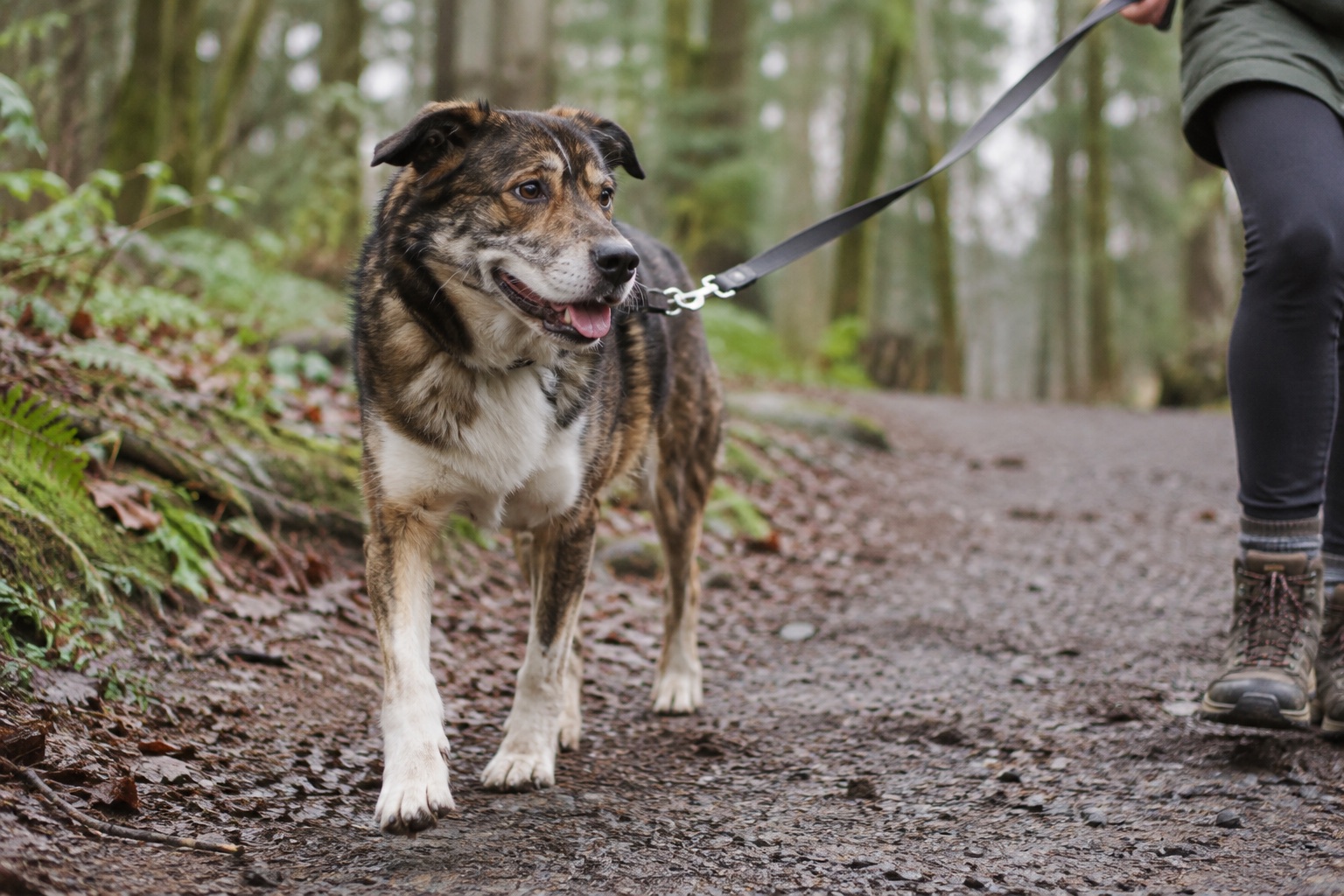
Some large adult dogs relax indoors after appropriate walks and enrichment. Some smaller dogs need frequent activity, intensive play, or more sound management. Ask how the dog behaves between activities, not only how energetic they appear during a shelter visit.
A realistic apartment plan includes bathroom trips, sniffing walks, play, training, and rest. A yard would not replace those needs, and living without one does not automatically prevent adoption.
Talk about noise honestly
Shared walls and hallways magnify barking. Ask whether the dog vocalizes at footsteps, doors, other dogs, separation, or frustration. Find out where that information was observed and what management has helped.
No rescue can promise a dog will be silent in a new environment. Plan for gradual exposure to building sounds, visual barriers if needed, enrichment, and professional help when barking is persistent or distress-related.
Consider time alone
Moving into a new home can temporarily change a dog’s ability to be alone. Even a dog with a good history may need a gradual plan. Ask what staff or fosters know about departures, confinement, destructive behavior, vocalization, and bathroom habits.
If you work long hours, price reliable dog walking or day care where appropriate. Do not assume a second pet will resolve separation-related behavior.
Create usable space
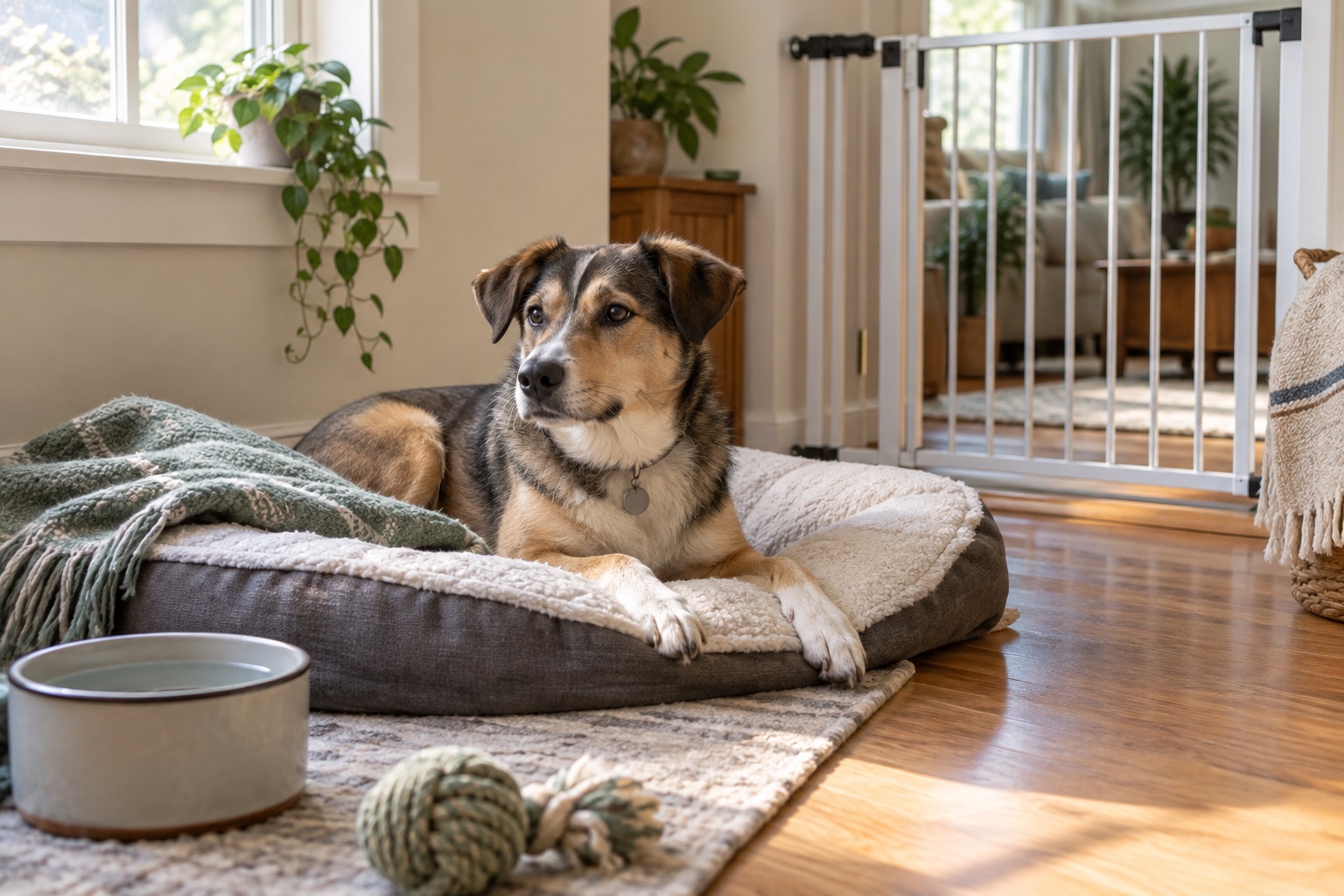
An apartment-friendly setup can include:
- A quiet bed or retreat away from the entry door.
- Gates to limit access while the dog learns the space.
- Food puzzles, chews, scent games, and short training sessions.
- Window coverings if outdoor movement triggers barking.
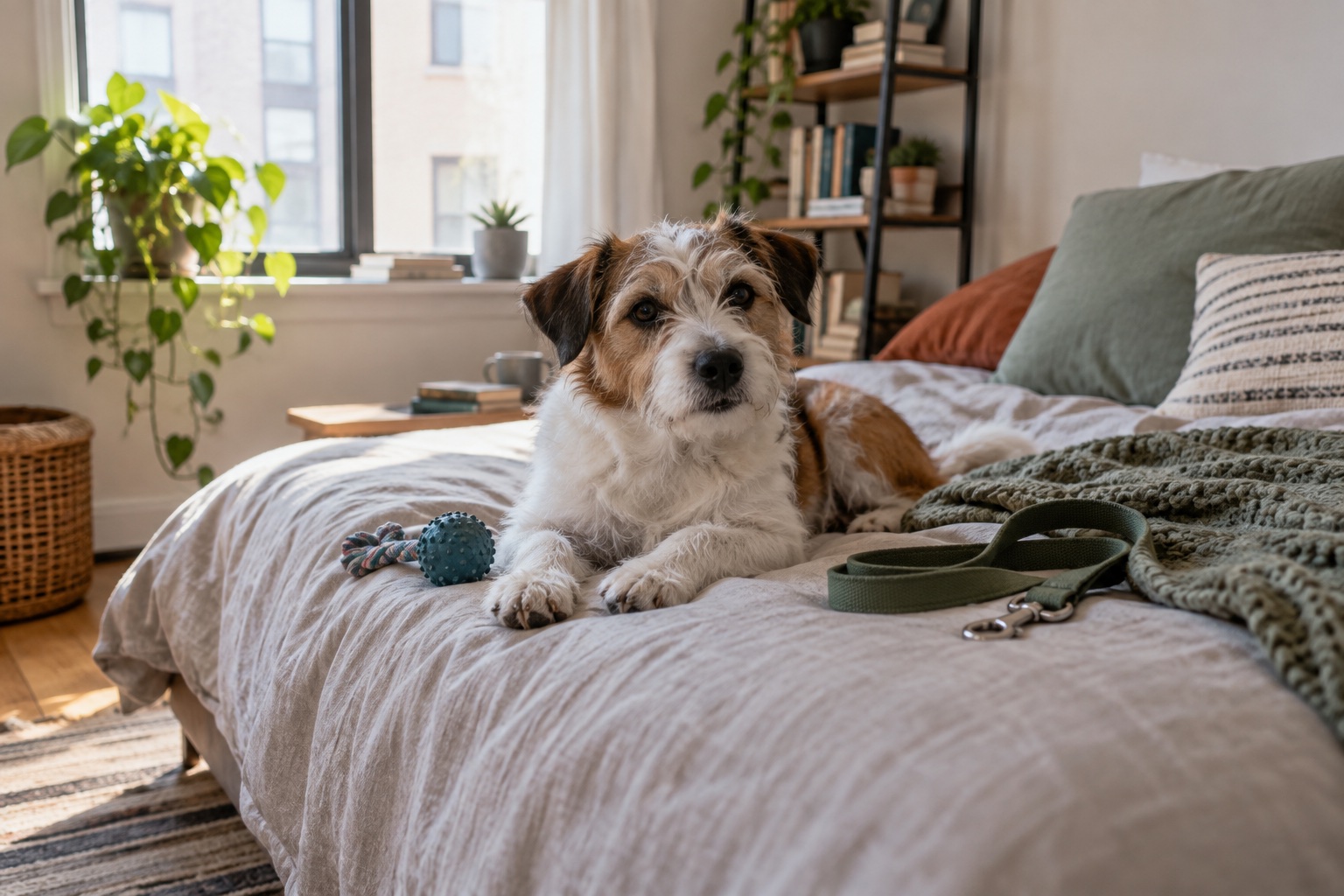
- A secure place for leashes, identification, and cleanup supplies.
Keep hallways and elevators controlled with an appropriate leash. Give neighbors and other dogs distance rather than forcing greetings in tight spaces.
Adult and senior dogs can be strong candidates
An adult or senior may have a more observable energy level and daily rhythm. This does not mean every older dog is low energy or comfortable alone, but staff may be able to describe the dog with greater specificity than they can predict a puppy’s adult needs.
The ASPCA’s moving guidance(opens in a new tab) recommends pet-proofing, beginning with a home-base area, and gradually expanding access as a pet becomes comfortable. That same approach can make an apartment feel more manageable after adoption.
Questions for the shelter
- Does the dog settle after exercise, and what exercise is enough?
- What sounds or sights trigger barking?
- Has the dog lived in shared housing?
- What happens when the dog is left alone?
- Are there mobility or bathroom needs that affect stairs and elevators?
- What enrichment does the dog choose?
Use Match Me to include home type, schedule, activity, and care preferences in your shortlist. Then discuss the individual dog and your building with the rescue before applying.