Choose a cat by matching their individual social style, activity, age, care needs, and history with your household. A successful match depends less on color or breed and more on what daily life will feel like for both of you.
Decide what companionship means to you
Some cats seek frequent physical affection. Others prefer sitting nearby, initiating short interactions, or watching from a high perch. Neither style is better. Think about whether you want an active playmate, a quiet companion, an independent presence, or a cat likely to enjoy a busy family.
Ask foster caregivers and shelter staff how the cat asks for attention, responds when attention ends, plays, rests, and reacts to unfamiliar people. Foster observations can be especially helpful because they come from a home environment.
Compare kittens and adult cats
Kittens are curious and entertaining, but they need frequent play, supervision, safe social experiences, and patient teaching. Their adult personality is still developing. Two compatible kittens may direct some play toward each other, but a pair also doubles routine and veterinary costs.
Adult cats often have more observable preferences around touch, play, quiet, and other animals. Senior cats may offer a settled rhythm while needing thoughtful veterinary care and accessible food, water, litter, and resting areas.
Plan for activity and enrichment
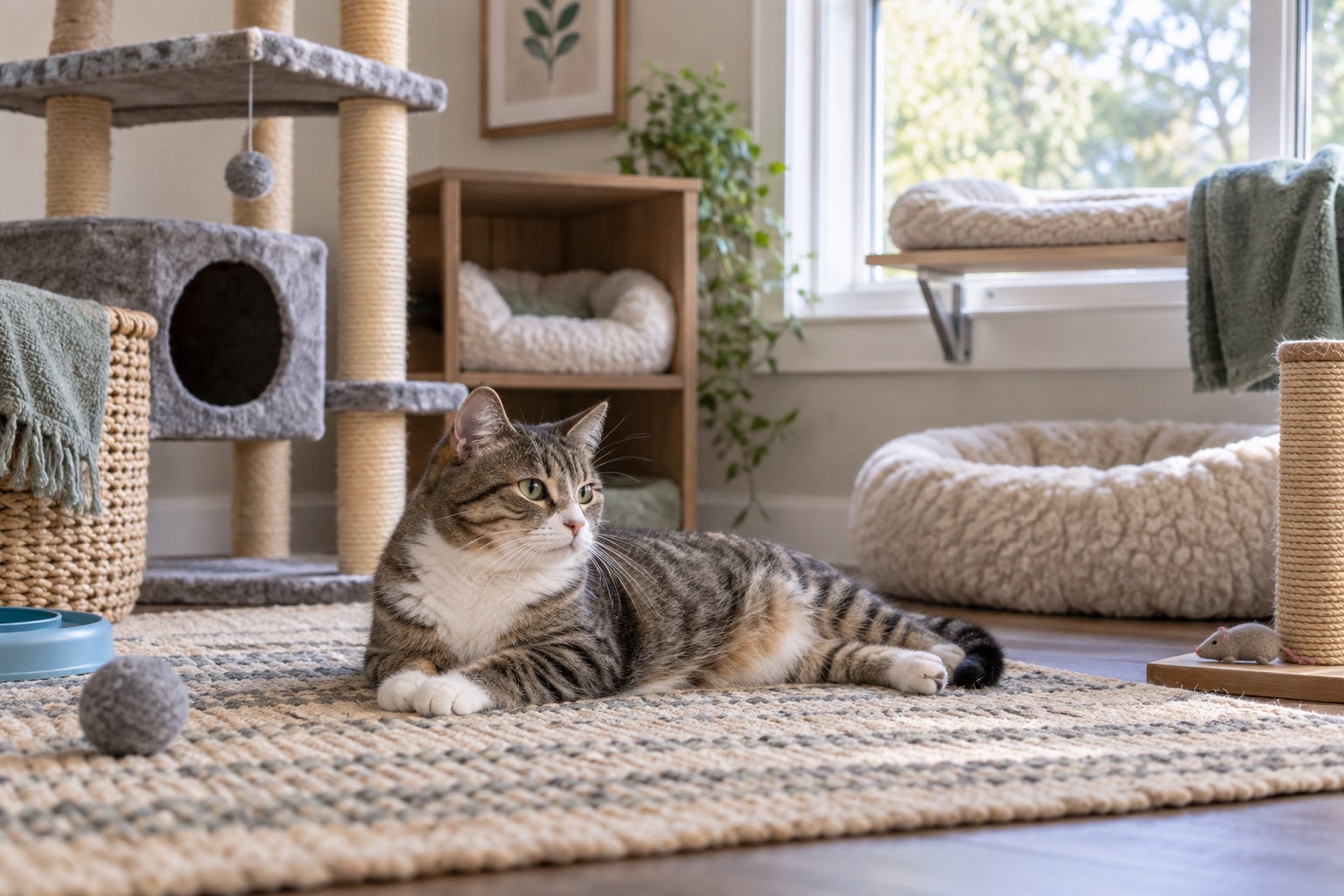
Indoor cats need daily opportunities to climb, scratch, stalk, chase, explore, and retreat. Consider whether your space can support:
- Vertical territory such as sturdy cat trees or shelving.
- Multiple scratching surfaces.
- Interactive play sessions.
- Quiet hiding areas that remain undisturbed.
- Accessible litter boxes placed away from food and noisy equipment.
A smaller home can work well when it provides usable vertical space and predictable resources.
Ask about sociability and handling
A cat who hides during a shelter visit may be frightened rather than unfriendly. Give the cat time and let staff guide the interaction. Ask how the cat behaves after settling, whether they enjoy petting, how they communicate that they are finished, and how they handle grooming, carriers, and veterinary visits.
Avoid forcing contact. Choosing a cat includes respecting the ways that cat gives consent and asks for space.
Consider children and other pets
Past success with a child, dog, or cat is useful context but not a guarantee. Ask about the age and behavior of the people or animals involved, how introductions occurred, and whether the cat had ways to leave the interaction.
For a multi-cat home, plan a separate transition room and gradual introduction. The Feline Veterinary Medical Association(opens in a new tab) advises considering resident pets’ temperaments, the new cat’s needs, available resources, veterinary care, and patience during introductions.
Understand grooming and health needs
Long coats may need frequent brushing and professional help if matting develops. Any cat can have dental, dietary, mobility, or medication needs. Ask for available veterinary records and discuss ongoing care with your own veterinarian.
Before adopting, budget for food, litter, preventive care, identification, enrichment, carriers, scratching supplies, and unexpected treatment. Confirm what the adoption fee includes.
Questions to ask before adopting
- What is this cat’s daily routine in the shelter or foster home?
- How do they show affection, stress, and the need for space?
- What type of play do they enjoy?
- Have they lived with children or other animals?
- What medical, dietary, litter-box, or grooming needs are known?
- Would they benefit from adoption with a bonded companion?
Use Match Me to compare adoptable cats with your household and preferences. Treat the result as a shortlist, then let the shelter’s current knowledge and the cat’s individual behavior guide the decision.